How to Treat Borehole Water for Safe Industrial Use?
Borehole water is a popular independent and reliable water source for factories, farms, hotels, schools and residential communities across many regions. Despite its stable supply, raw well water naturally contains various impurities. If used directly without treatment, these contaminants will damage production equipment, compromise product quality, and even pose health risks to personnel.
For any industrial production or potable water application, professional water quality testing and targeted treatment are mandatory before putting well water into use.
Common Issues Found in Untreated Borehole Water
Borehole water quality varies greatly depending on local geography and underground geological conditions. Most raw well water suffers from the following typical problems:
Excess iron and manganese content
High water hardness
Elevated total dissolved solids (TDS)
High turbidity
Unpleasant odor
Bacterial contamination
Leaving these pollutants unaddressed will trigger a series of operational troubles. Common consequences include pipe scaling, surface staining, pipeline corrosion, and fouling on filtration membranes, which shortens equipment service life and increases maintenance costs.
Step 1: Conduct Professional Water Quality Testing
A full laboratory water analysis is always the first step of well water treatment.
Key indicators that need testing include: pH value, total dissolved solids (TDS), water hardness, iron, manganese, silica, turbidity and bacteria.
The detailed test report serves as the core basis to design a customized water treatment process and select suitable equipment.
Step 2: Remove Excess Iron and Manganese
Iron and manganese are the most prevalent contaminants in groundwater. You can easily identify excessive iron and manganese through obvious signs: yellow or brown discolored water, black stains on plumbing fixtures, and a distinct metallic taste.
The mainstream treatment methods include aeration, oxidation reaction, multi-media filtration and manganese sand filtration. These processes can effectively eliminate iron and manganese substances in well water.
Step 3: Reduce Water Hardness
Water with high hardness is prone to forming hard scale. Scale buildup will severely affect the normal operation of boilers, heat exchangers and reverse osmosis (RO) membranes.
Water softeners are widely applied to remove calcium and magnesium ions, the main substances causing water hardness, and prevent scaling issues.
Step 4: Install Reverse Osmosis System (If Required)
If the test result shows high TDS or salt concentration in well water, a reverse osmosis (RO) system is a necessary solution.
RO systems can efficiently filter out dissolved salts, heavy metals, nitrates, fluorides and other harmful substances. Water treated by reverse osmosis can fully meet standard requirements for industrial use and daily drinking.
Standard Well Water Treatment Process Flow
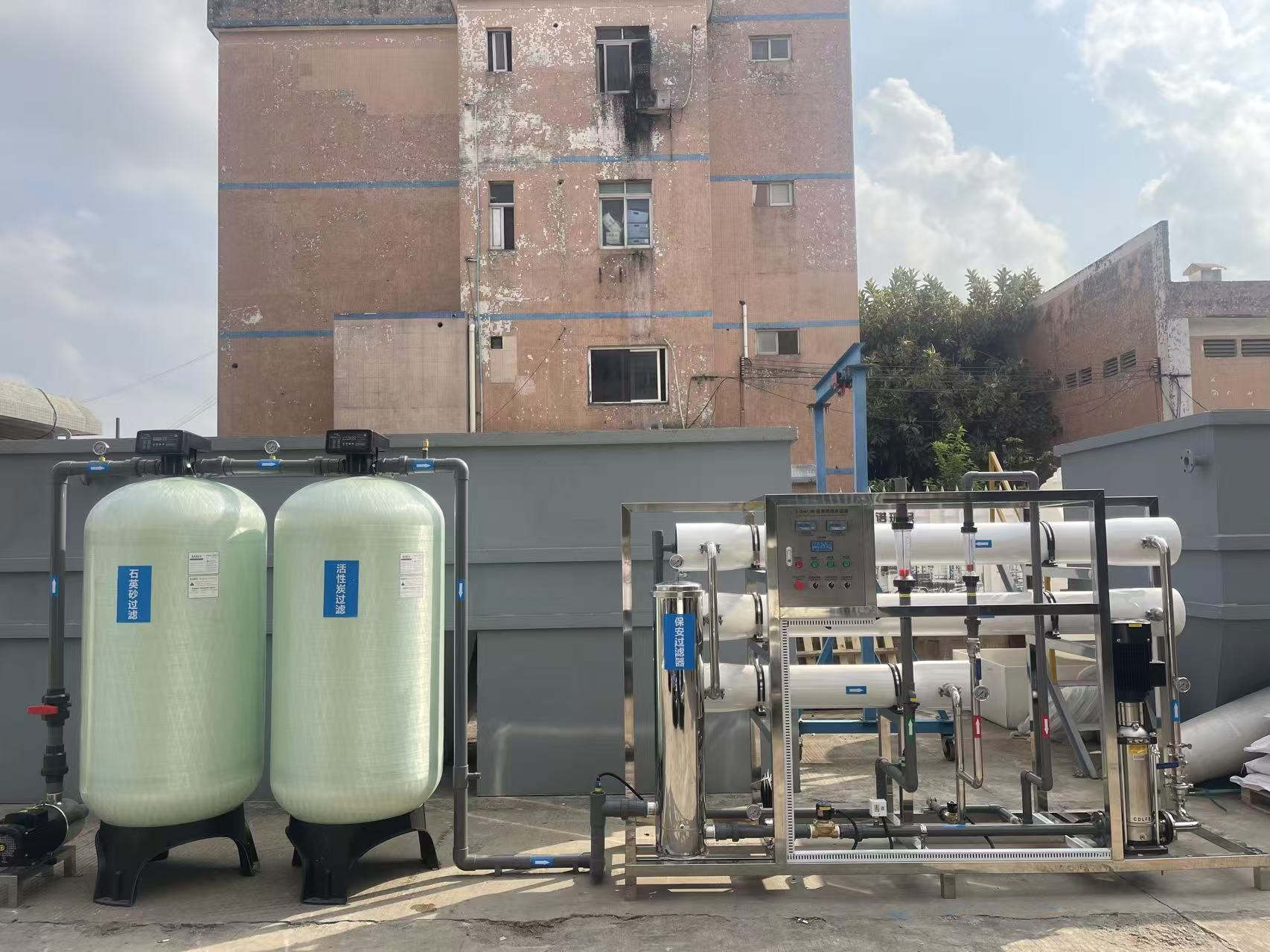
A widely adopted complete treatment sequence for industrial well water is as follows:
Well pump → Raw water tank → Iron and manganese removal filter → Water softener → Ultrafiltration (UF) system → Reverse osmosis (RO) system → Finished water storage tank
The final process configuration will be adjusted according to actual water quality data and specific usage demands.
Conclusion
There is no one-size-fits-all solution for well water treatment. The most efficient and cost-effective water treatment system must be designed based on professional water quality reports and practical application scenarios.
A properly configured treatment system can significantly improve well water quality, protect production equipment from damage, cut down long-term operation and maintenance expenses, and ensure stable, safe water supply for industrial and daily use.