Meta Title: How Often to Replace Industrial RO Membranes? Lifespan Guide
Meta Description: Learn the typical lifespan of industrial RO membranes, key signs of membrane degradation, and 5 engineering tips to extend membrane service life.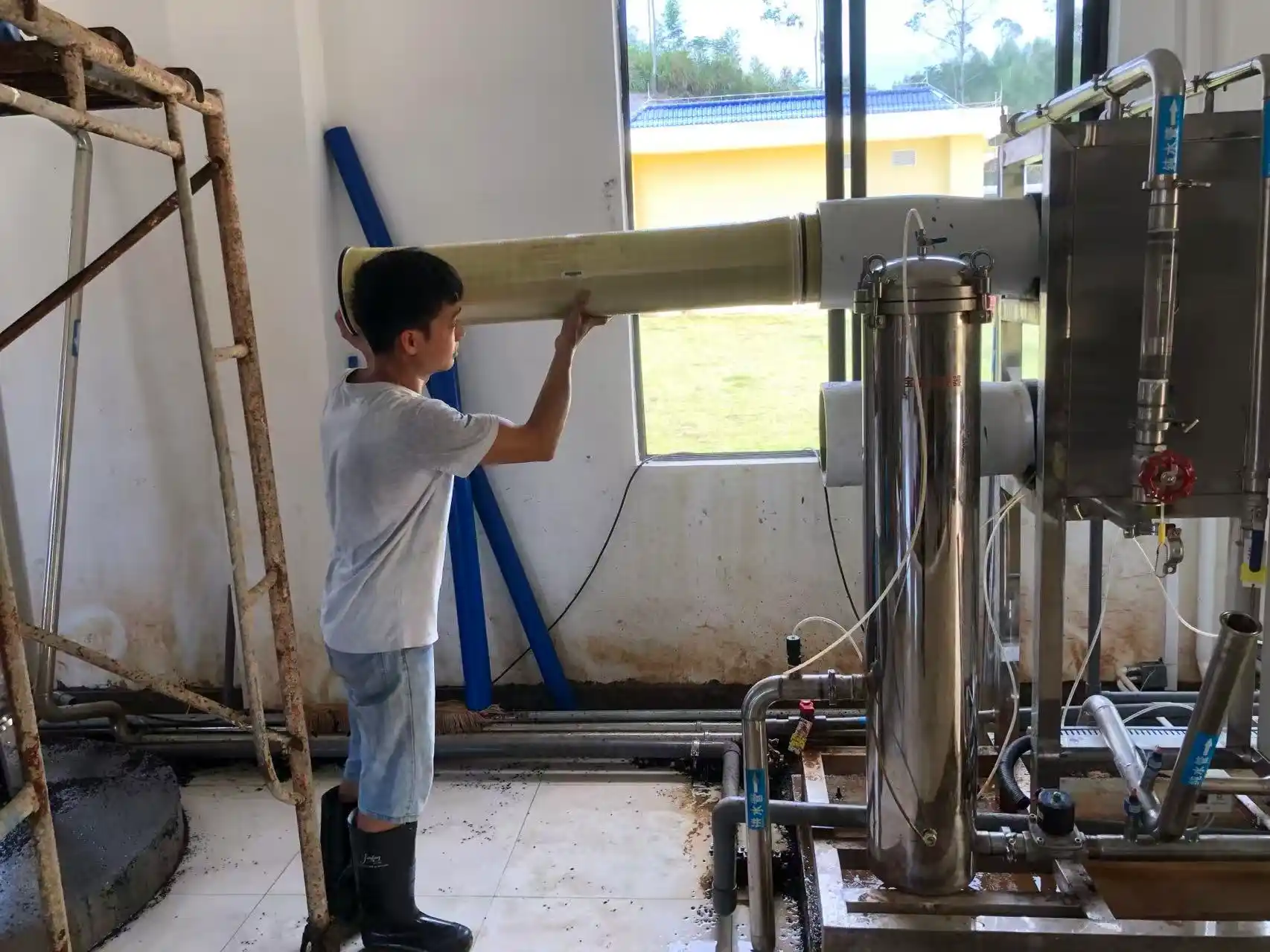
In most industrial water treatment systems, high-quality polyamide RO membranes have an average service life of:
3 to 5 Years
Best-Case Scenario (5–7+ Years): Achieved with optimized pretreatment equipment, regular CIP chemical cleaning, and a consistent anti-scalant dosage.
Worst-Case Scenario (<2 Years): Common when treating challenging borehole water or high-TDS groundwater without proper dechlorination or filtration.
Understanding what accelerates membrane fouling helps prevent premature capital expenditure.
High levels of Total Dissolved Solids (TDS), suspended solids, biological organic matter, and heavy metals (such as iron and manganese) put maximum chemical stress on your RO system elements.
An RO skid relies completely on upstream protection. If your multimedia filters, activated carbon filters, water softeners, or ultrafiltration (UF) systems underperform, bulk contaminants will permanently blind the membrane surface.
When dissolved salts exceed their solubility limit on the brine side, they precipitate as hard scale. The most common culprits include:
Calcium Carbonate ($CaCO_3$)
Calcium Sulfate ($CaSO_4$)
Silica ($SiO_2$)
Standard thin-film composite polyamide membranes are highly sensitive to oxidizing agents. Continuous exposure to free chlorine causes irreversible chemical oxidation, tearing holes in the polymer layer and ruining salt rejection.
Delaying maintenance allows the fouling layer to compact. Industry standards recommend running a chemical CIP cycle as soon as baseline parameters drift by 10% to 15%.
If your system exhibits these trends even after a proper low-pH and high-pH CIP cleaning, the elements have reached their end-of-life:
Declining Salt Rejection: Product water TDS and electrical conductivity continue to creep up.
Reduced Permeate Flow: The system cannot meet its rated water production ($m^3/h$ or GPM) under normal design pressures.
Spiking Differential Pressure ($\Delta P$): High pressure drops across a stage indicate severe internal blockage or physical telescoping.
Irreversible Compaction: Permanent structural damage to the membrane backing due to prolonged operation at excessive pressures.
| Current System Condition | Root Cause Analysis | Recommended Engineering Action |
| Performance fully recovers after CIP | Reversible organic/mineral fouling | Continue operation and log normalized data. |
| Salt rejection remains low post-cleaning | Chemical oxidation or membrane aging | Schedule membrane replacement immediately. |
| Drastic flow drop + high $\Delta P$ post-CIP | Irreversible compaction or heavy silica scale | Isolate and replace the affected membrane stages. |
| Elements >5 years old with steady decline | Natural polymer degradation | Budget for a complete system re-membrane. |
Automate Data Normalization: Standardize your flow and pressure logs against temperature fluctuations to catch fouling trends early.
Maintain Strict Dechlorination: Monitor your carbon beds or optimize your sodium bisulfite ($NaHSO_3$) dosing to guarantee zero free chlorine reaches the RO skid.
Never Skip Cartridge Filter Changes: Replace 5-micron pre-filters when differential pressure reaches the manufacturer's limit (usually 15 psi / 1 bar).
Execute Preventive CIP Cleanings: Clean early when flow drops by 10%, not when it drops by 40% and creates fluid "dead zones."
Implement Low-Pressure Flushes: Program automatic permeate or fresh-water flushes during every shutdown to rinse away concentrated brine.
Relying purely on a calendar timeline to replace your industrial reverse osmosis membranes either wastes capital or risks downstream equipment damage. Performance data should always drive your procurement decisions.
If you are dealing with rapid fouling, high product conductivity, or need help auditing your pretreatment train, our technical engineering team is here to help.
Contact our water treatment specialists today. Send us your current feed water analysis report, system operating pressures, and flow rates for a tailored optimization strategy.