The DaChun water purification equipment is a device that produces water meeting the standards for direct drinking without adding any chemicals by filtering raw water through internationally popular methods such as reverse osmosis (a physical method). Zhongnuo Environmental Protection Company's ultrapure water equipment uses advanced ultra-low reverse osmosis technology to remove calcium, magnesium, bacteria, organic and inorganic substances, metal ions, and radioactive materials from the water. The purified water is crystal clear, sweet, and mellow. Medium and large-sized equipment is referred to as pure water equipment and can be used for drinking, cleaning, and as water for beverage production, among other purposes.
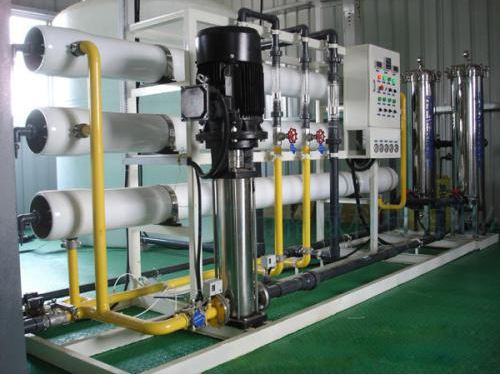
Operating Procedure for Ultra-Pure Water Equipment Mechanical Filter:
1. Operating Instructions
(1) Operation
Open the inlet and outlet valves, allowing water to pass through the filter layer from top to bottom. Adjust the valve opening to control the inlet flow at 10 m³/h. When the equipment has been running continuously for 24-72 hours, perform backwashing of the activated carbon to remove fine carbon particles and surface suspended matter.
(2) Backwashing
Open the backwash drain valve, while slowly opening the backwash inlet valve. Gradually increase the inlet flow so that water passes through the filter layer from bottom to top, loosening the activated carbon in reverse and flushing out the debris trapped in the filter layer. The backwash flow should be controlled at about 10-20 m³/h (start 1 raw water pump), avoiding loss of filter media. The backwash time should not be less than 10-15 minutes and can be adjusted according to operating conditions.
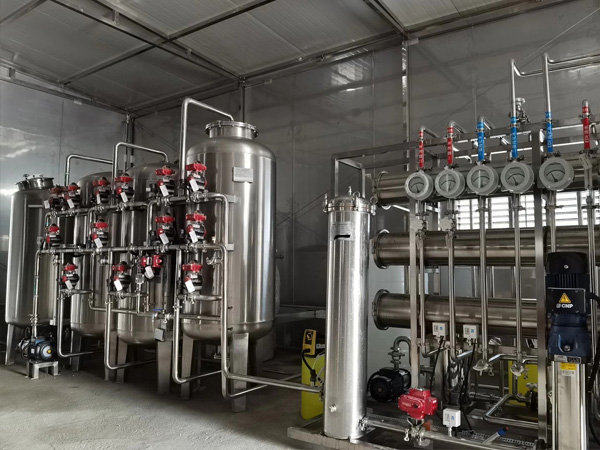
(3) Backwashing
Open the water inlet valve and the backwash drainage valve to allow the water to drain into the sewer. The backwash flow rate is 10 m³/h, and the backwash time is 10–20 minutes, until the water at the drain outlet is colorless.
(4) Replacement of Activated Carbon Media
When the residual chlorine in the water from the activated carbon filter is greater than 0.1 mg/L or the organic material leakage in the effluent exceeds 0.95C₀ (where C₀ is the concentration of organic material in the influent), it indicates that the activated carbon media has lost its adsorption capacity. At this point, the activated carbon media should be replaced.
2. Overview
Activated carbon filters are mainly used to remove organic matter, color, and residual chlorine from water. When used as a pretreatment for ion exchangers, they can effectively extend the service life of ion exchange resins, improve the quality of the effluent, and prevent resin fouling. Activated carbon filters are filled with activated carbon media.